Simulate complex return flows
Map distributed products and materials, find recovery partners and compare direct routes with consolidation hubs. See how volume, distance and processing costs affect the business case.
 Northwind · DemoNW
Put the whole return network on the map.
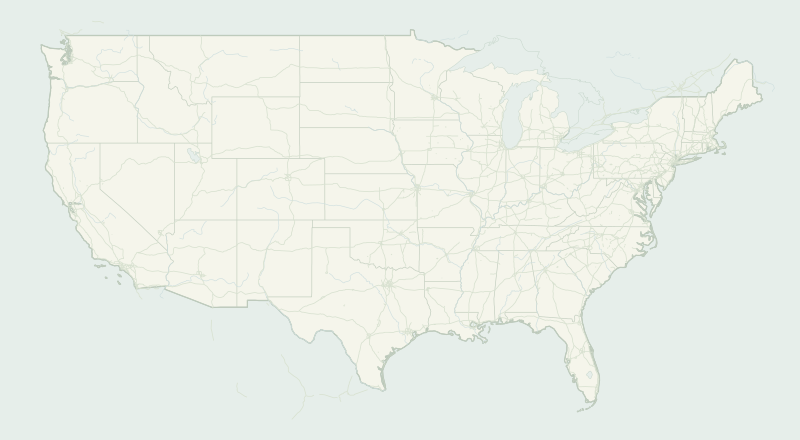
Find the partners that fit the material.
Compare direct routes with regional hubs.
Individual site collections
Consolidated recovery volumes
See when recovery starts to pay.
Illustrative copper scenario · transport and processing included
Map sites and a recovery partner, add a possible consolidation hub, compare the direct and hub routes, then review recovered value against the transport and processing assumptions.
Find the route worth putting into motion.
From distributed volumes to a programme with visible assumptions.
- Model networks across many locations
- Compare partners, routes and consolidation
- Test costs and recovered value before you commit
How do I use it?
Map collection sites, hubs and recovery partners.
Bring distributed sites, volumes and recovery processes into one scenario. Map the handovers from return to the next useful material or product.
- Distributed supply
- Model returns spread across sites and regions.
- Connected processes
- Put collection, consolidation and recovery steps in order.
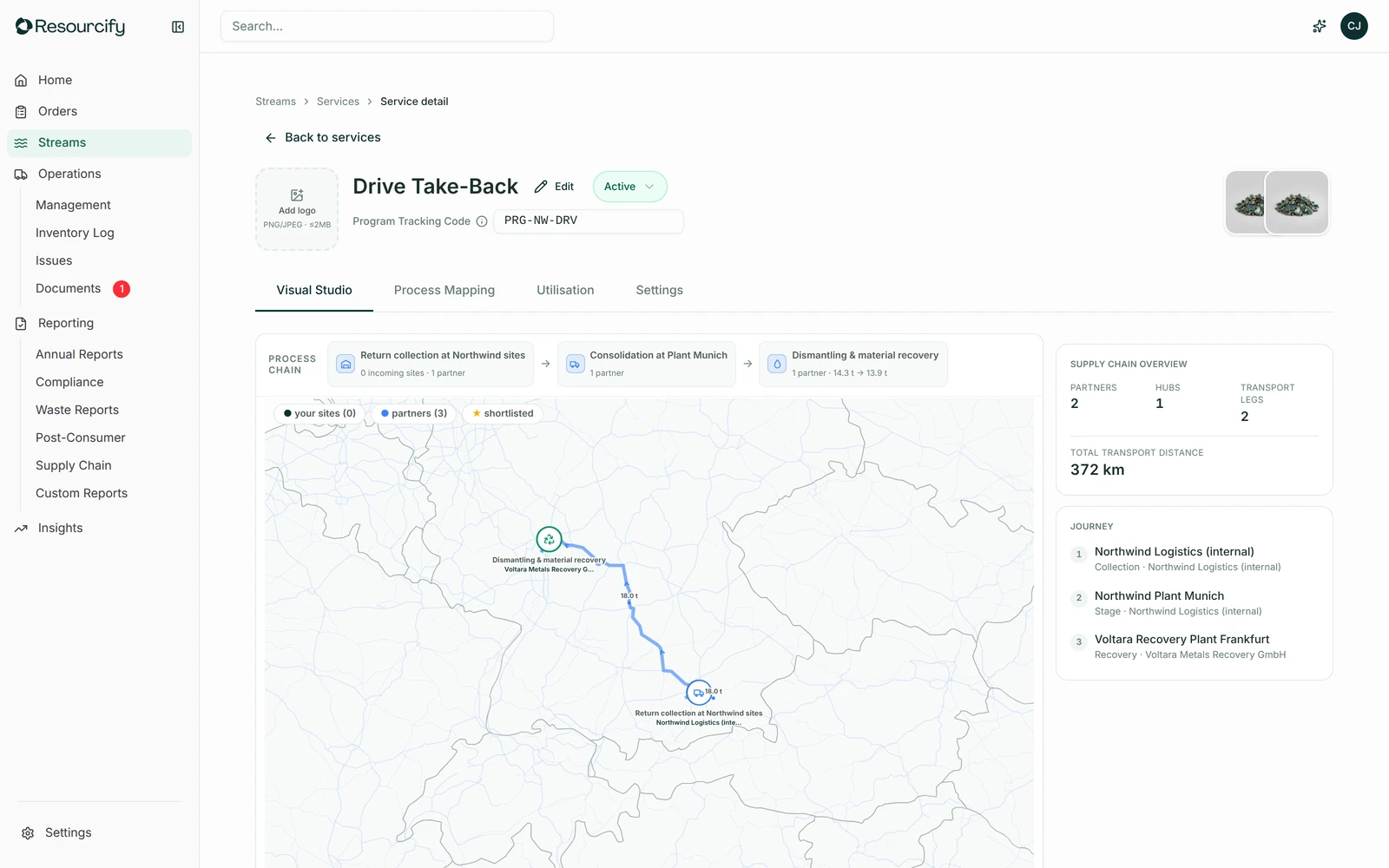
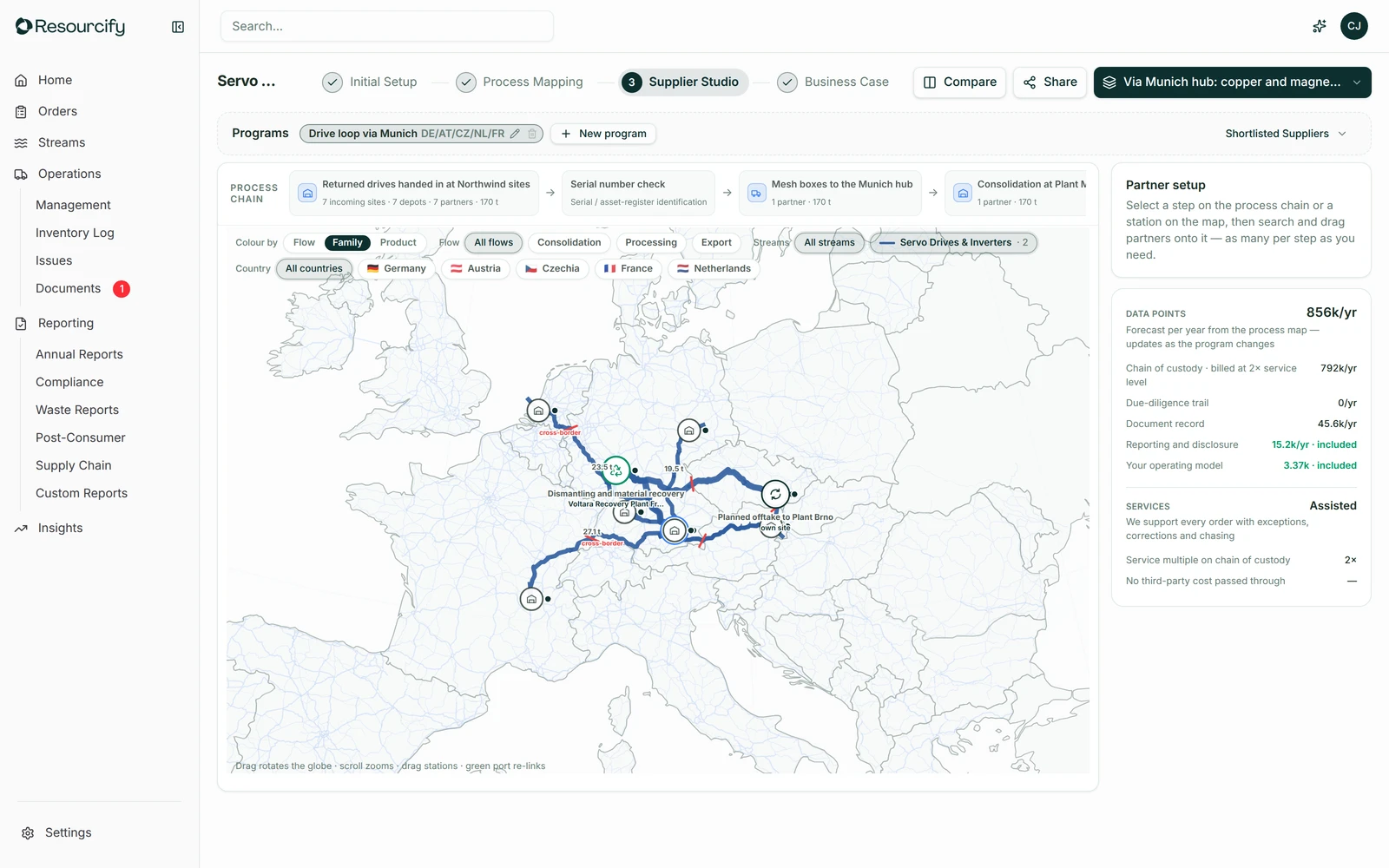
Compare transport and processing routes.
Try direct collection and regional consolidation. Compare partner options and examine how the route changes transport, handling and recovery costs.
- Partner choices
- Explore candidates for the required recovery process.
- Consolidation options
- Compare direct routes with intermediate hubs.
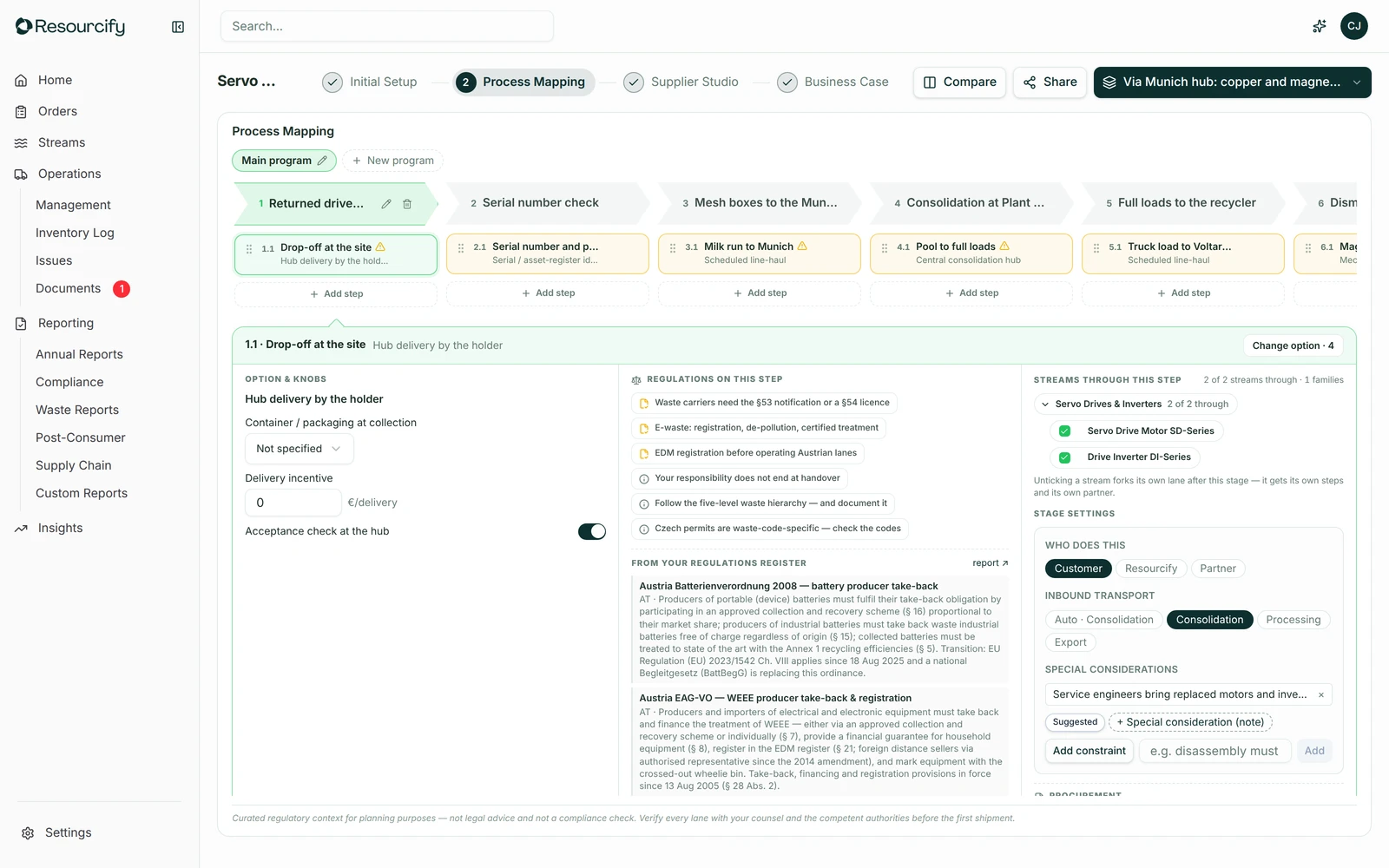
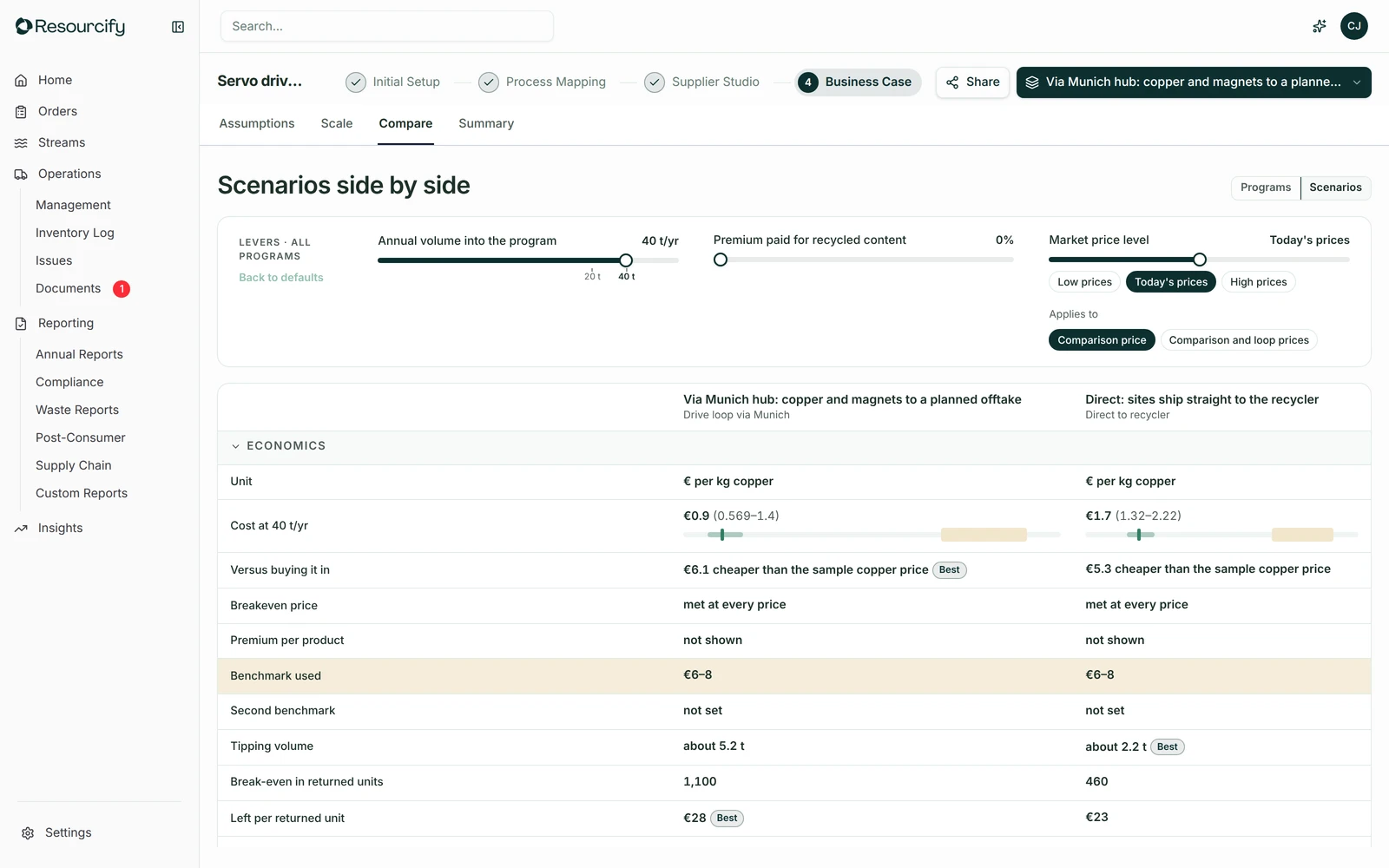
Review recovery costs and material value.
Compare recovered value with the cost of bringing the material back. Change the volume and assumptions to see which scenario is worth taking forward.
- Cost against scale
- See how the model changes as recovery volumes grow.
- Transparent assumptions
- Keep material value, transport and processing costs visible.
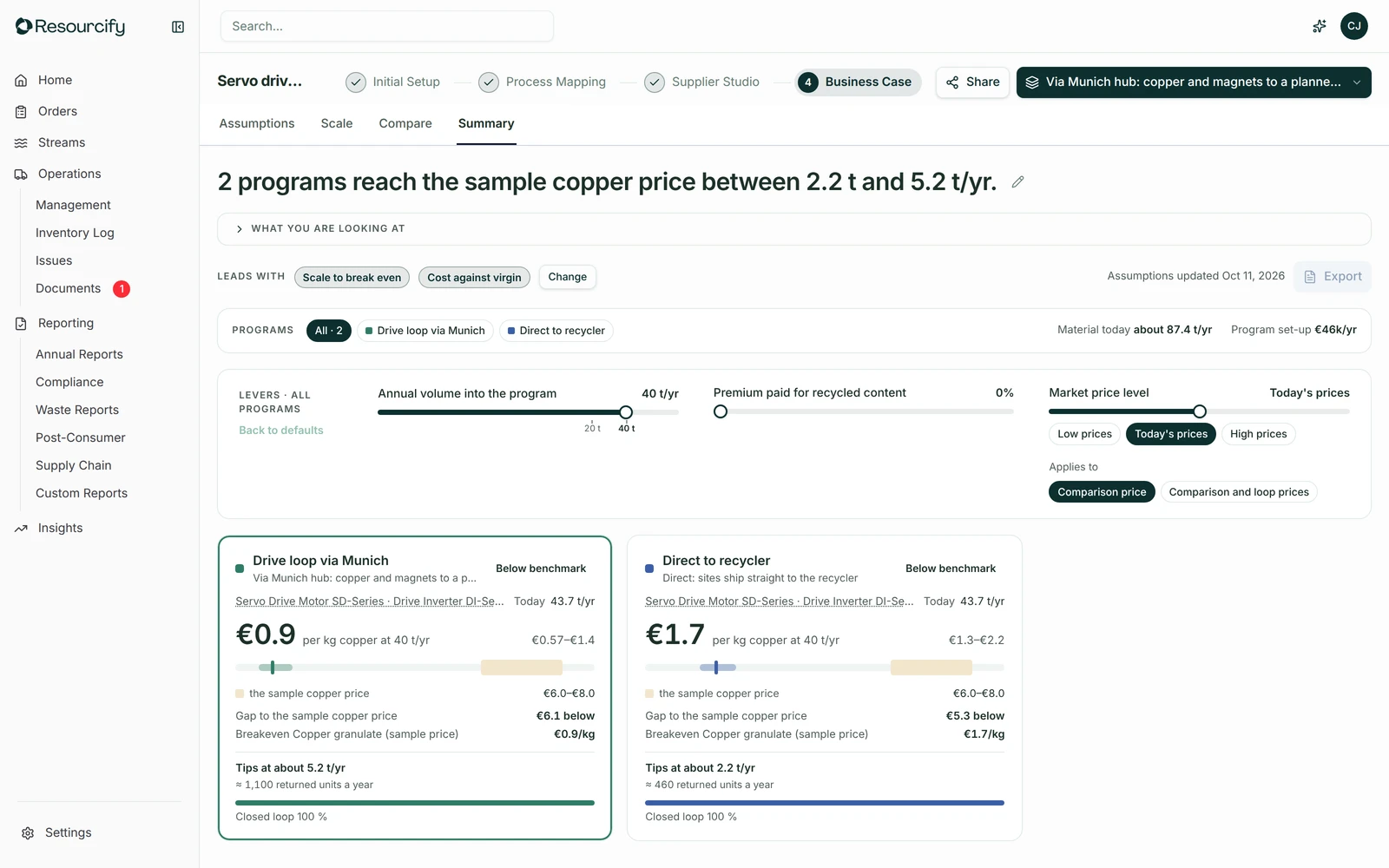
One platform.
Your circular use case.
Start with material records, AI workflows and reporting. Add the apps your operation needs. Use it on desktop or mobile, scan a QR code on site, or connect your tools through API and MCP.
Run it with your team, or bring ours in for orchestration.