Track recycled content from recovery to new products.
Connect recovered materials to their origins and their next use. Keep the records behind your recycled-content figures, even when materials pass through mixed batches and processing steps.

A fictional electronics product line uses 60 tonnes of credited recycled material against 100 tonnes of production need: 40 tonnes of aluminium and 20 tonnes of steel. The report shows year comparisons, source batches, custody records and a PDF certificate containing scope, quantities, allocation and evidence. This is a simplified version of the product reporting and certificate workflow, using fictional data.
A percentage becomes useful when you can explain it.
From source material to the next product, with the records attached.
- Show recycled share with supporting data
- Keep origins through mixed batches
- Separate recovered output from collected volume
How do I use it?
Review the product’s recycled-content report.
Build the recycled-content figure from material masses and declarations. See the share and the evidence behind it in the same product record.
- Mass-weighted figures
- Combine each material’s share with its contribution to the product.
- Visible evidence
- Inspect the declarations supporting the calculation.
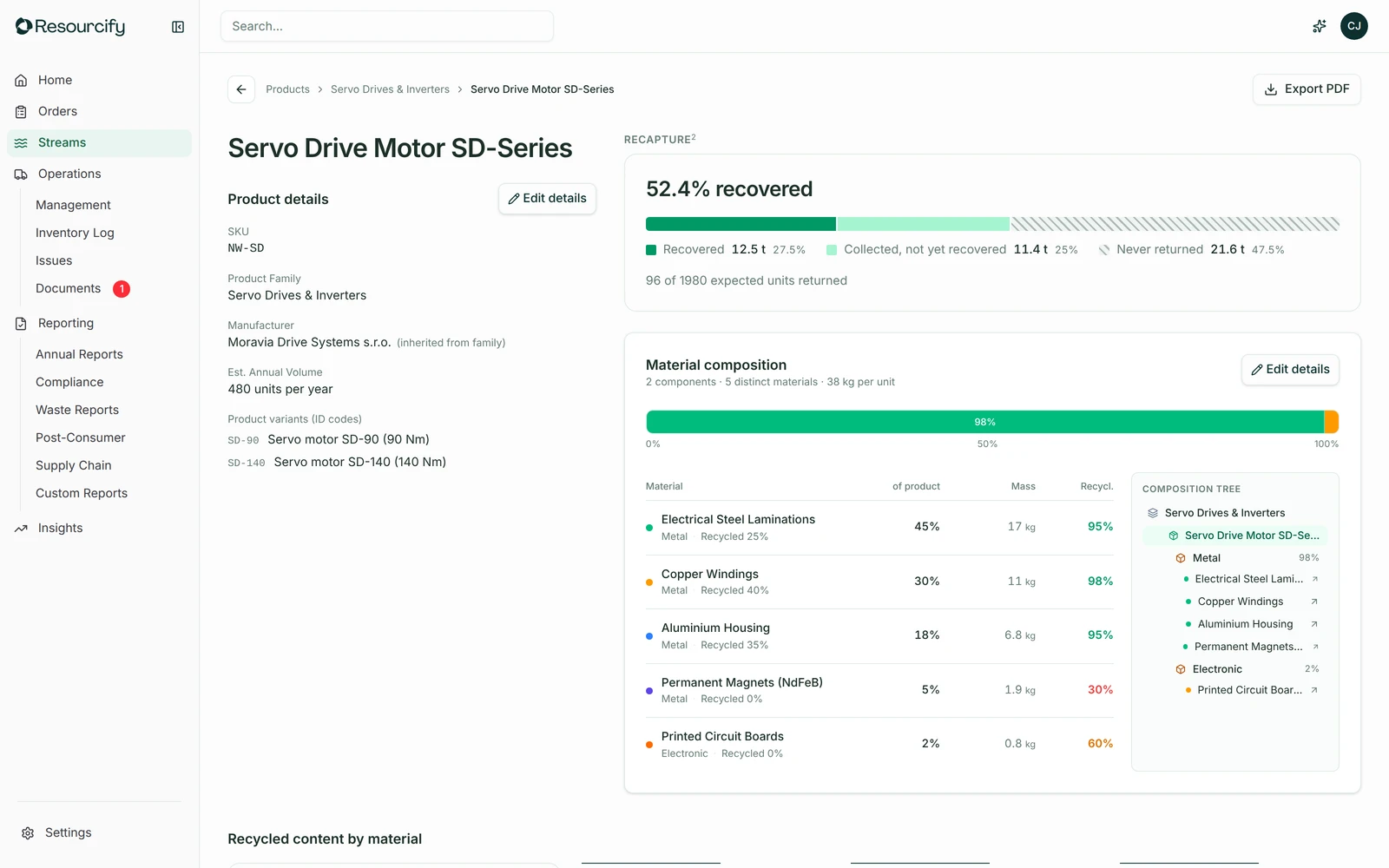
Trace the batches behind your recovered supply.
Trace recovered material back to source products and containers. Combining lots does not mean losing the contribution of each return.
- Source links
- Keep product and container origins in the material records.
- Through processing
- Retain the chain as material passes through transformations.
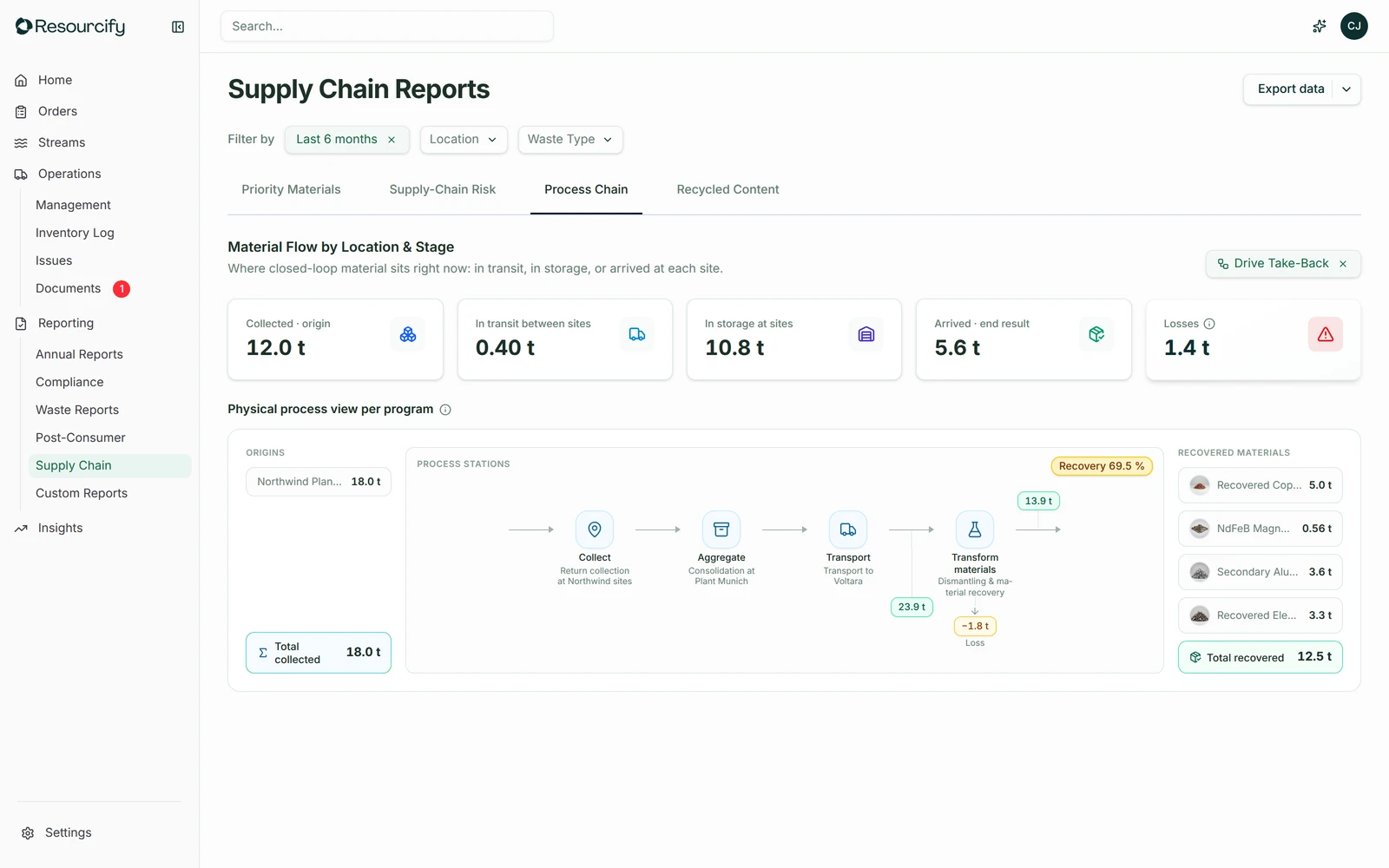
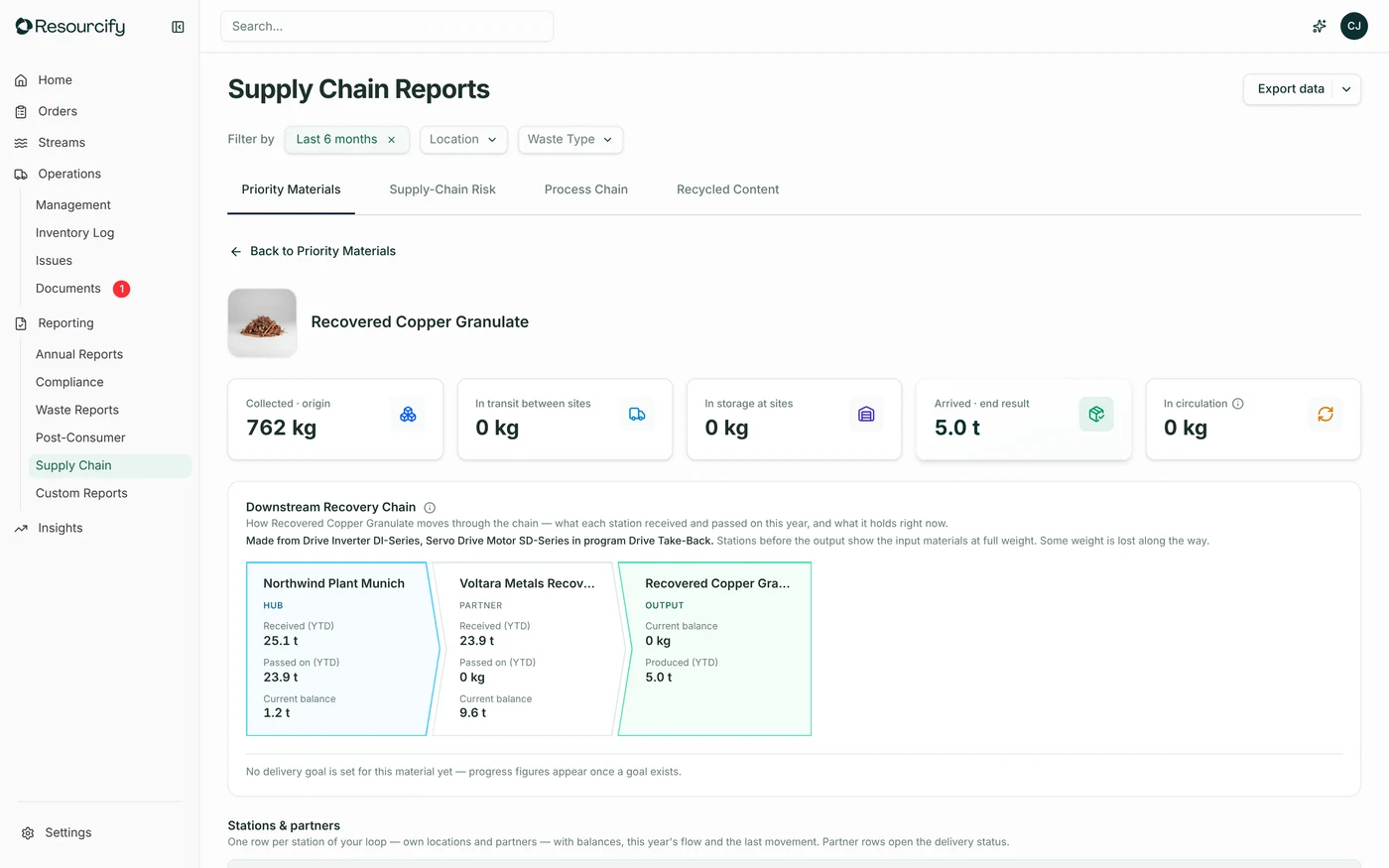
Review recovered material across your operation.
Read the recorded recovery outcomes across your operation. The report keeps collected quantities, recovered outputs and the wider material flow in view.
- The whole operation
- Compare material flows and recorded recovery results.
- Evidence behind the claim
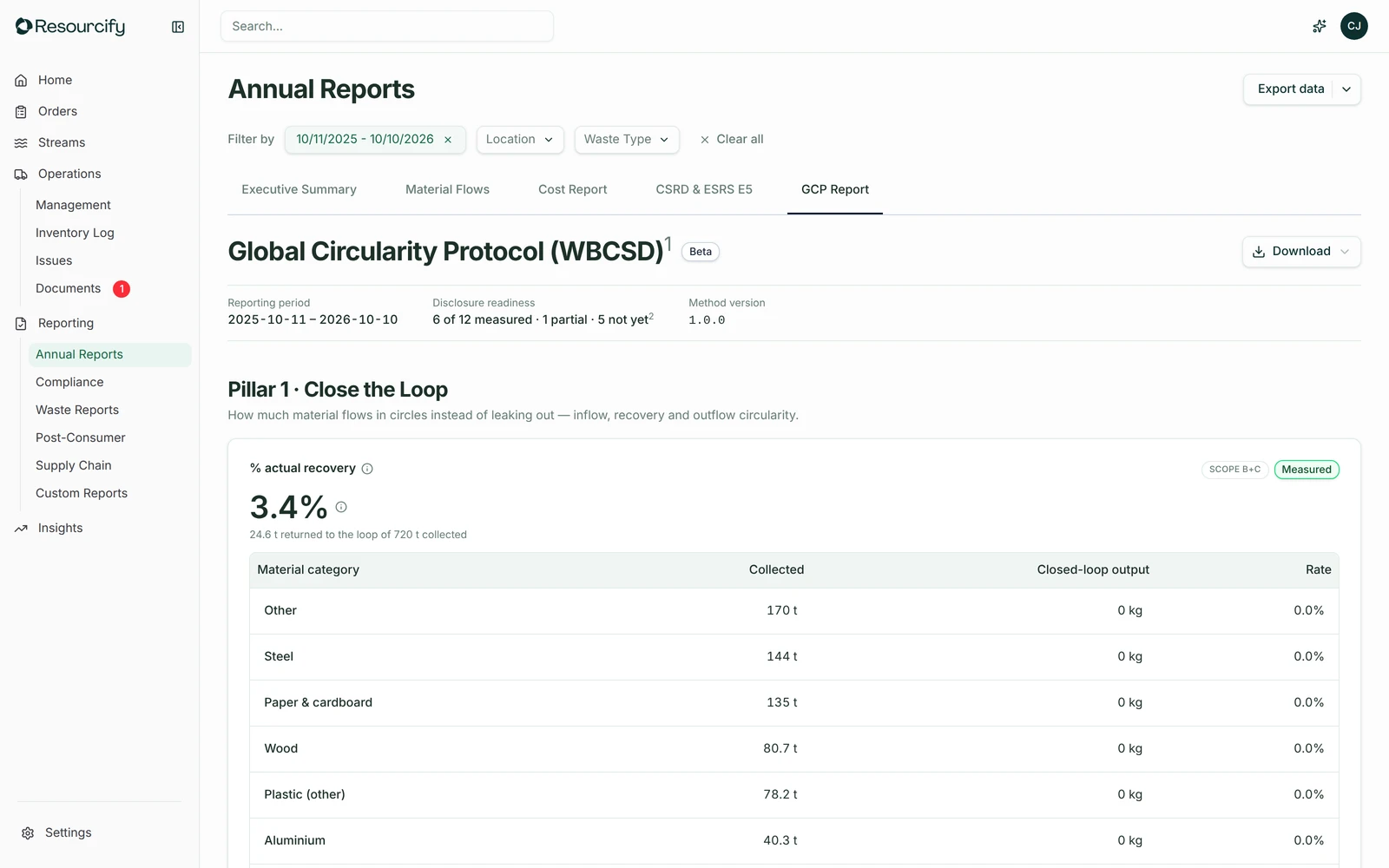
- Use the recycled-content report and certificate workflow shown above to inspect the supporting supply records.
One platform.
Your circular use case.
Start with material records, AI workflows and reporting. Add the apps your operation needs. Use it on desktop or mobile, scan a QR code on site, or connect your tools through API and MCP.
Run it with your team, or bring ours in for orchestration.