Uncover and recover the value in your waste.
From ordering and disposal to invoices and reporting, Resourcify brings the waste of all your sites into one software. Keep your existing disposers, bring in their documents and see volumes, costs and recycling rates for every site.




Ordered in one place
Documents read and checked
Reported across sites
The business case for digital waste management
In most companies, waste management runs alongside another job: a portal for each disposer plus emails and phone calls for the rest, invoices that arrive months after the pick-up, disposal records in envelopes that someone types into Excel. Resourcify brings orders, documents and costs from every site and disposer into one software. HORNBACH processed 33,000 orders automatically in its first year; according to the Syntegon team, the time spent on waste management fell by up to two-thirds.
- Time spent on waste admin
Stop typing in disposer documents
Delivery notes, weighing slips and invoices arrive by upload or a dedicated email inbox and are read into records. Your team checks what the software flags instead of typing every document.
- Invoice errors
Check what you are billed for
Each invoice sits next to its order, weighing slip and agreed price, so a skip that was never collected or a price that does not add up is easy to spot, even when the invoice comes months later.
- Time to the waste balance
Have your waste figures ready when they are due
Waste balance, separate-collection rate and CSRD figures come from the same records, per site, stream and disposer, for one site or the whole group.
“The software gave us the data transparency we needed to analyse our waste streams in detail. This enabled us to uncover new sources of recyclables and untapped potential for their revenue, but also to optimise container sizes and collection intervals to save costs.”
 Erik BalmesHead of Infrastructure Services, Fraport
“Before working with Resourcify, our daily work meant handling orders by phone, email, letter and fax, with documentation spread across Excel. Today it all runs automatically through the software, almost on the side, so we have more time for sustainability projects.”
Max FecherWaste and Disposal Management Officer, Fraport“Thanks to the process optimisations resulting from our work with Resourcify, we can save on expenditure, generate revenue from recyclables and reduce costs for our company overall.”
 Andreas BackHead of Quality Management, Environment and CSR, HORNBACH
Every waste stream in one place
From paper and plastics to hazardous waste, every stream your sites produce is ordered, documented and reported in the same software.
See which streams you can bring together.
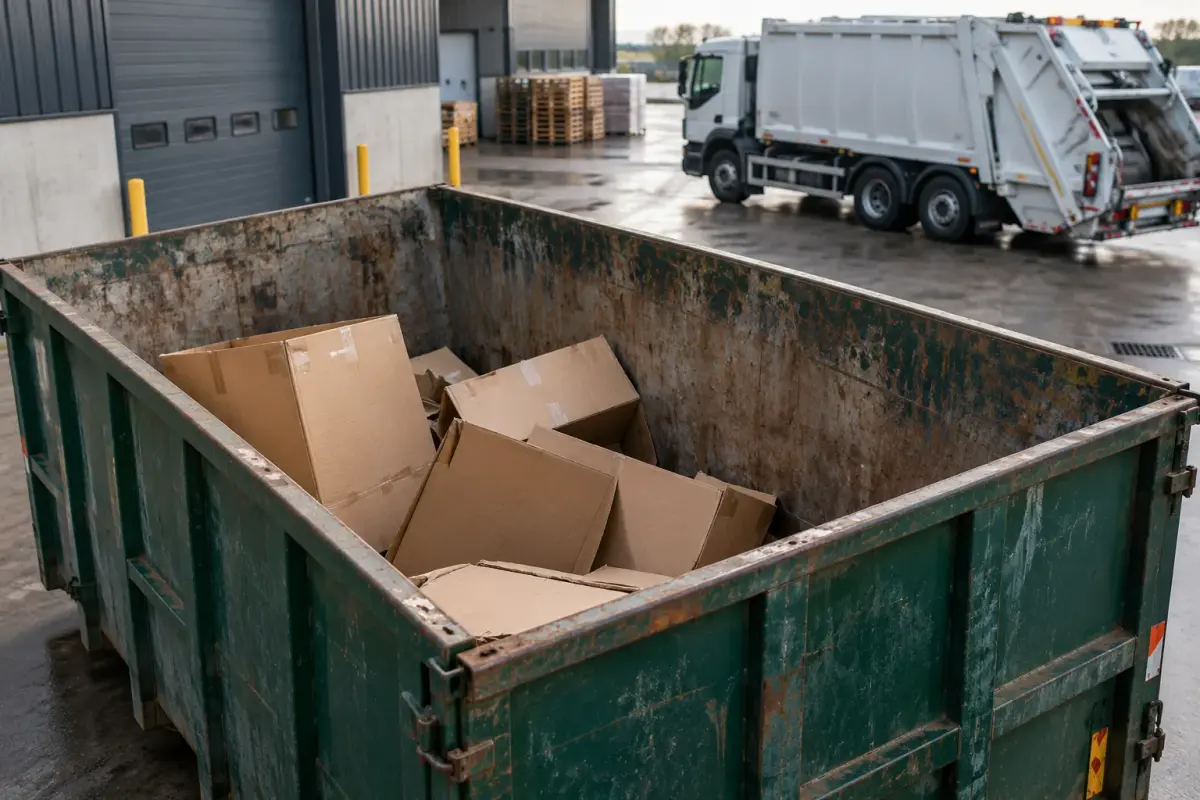
Paper and cardboard
CardboardPaperConfidential documents
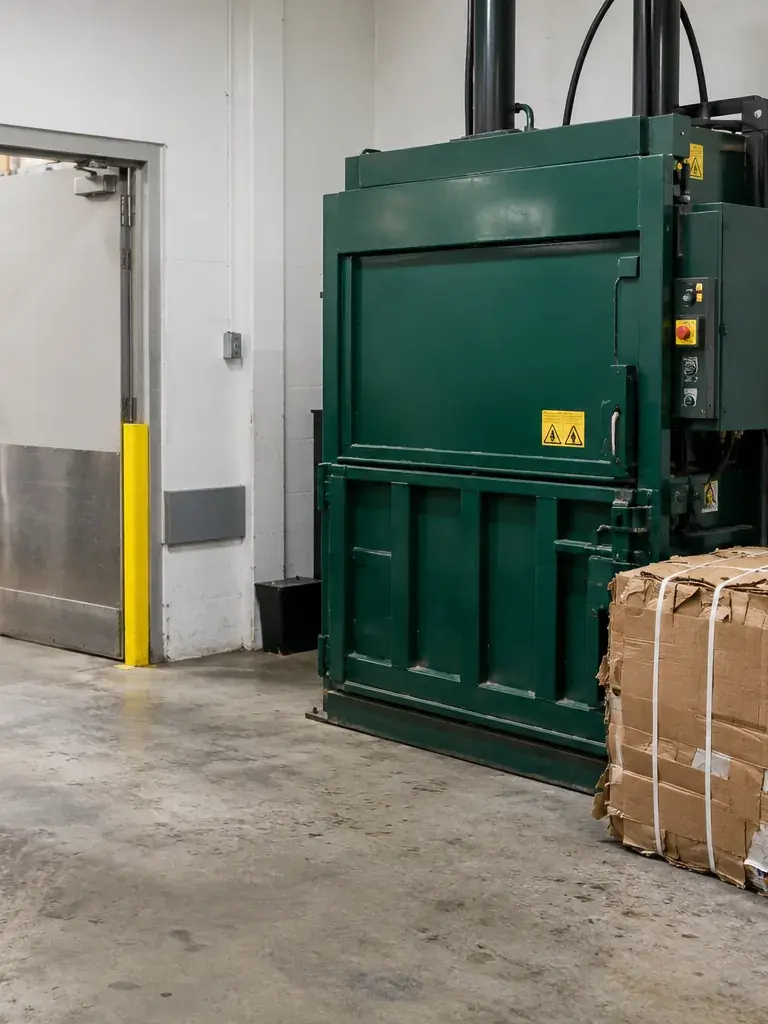
Plastics and foils
FoilsMixed plasticsPackaging
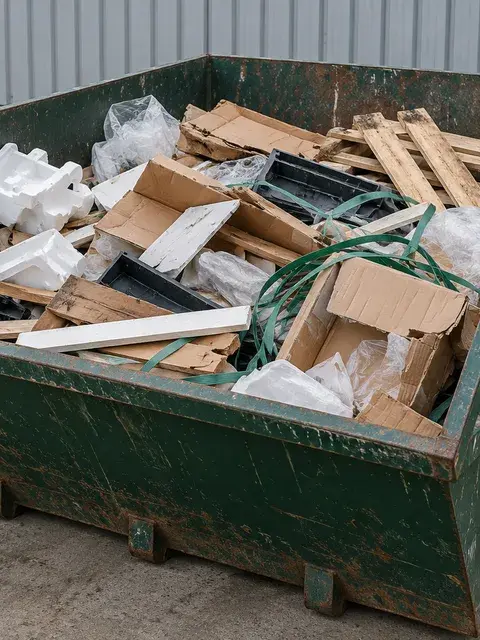
Mixed commercial waste
Commercial wasteBulky waste
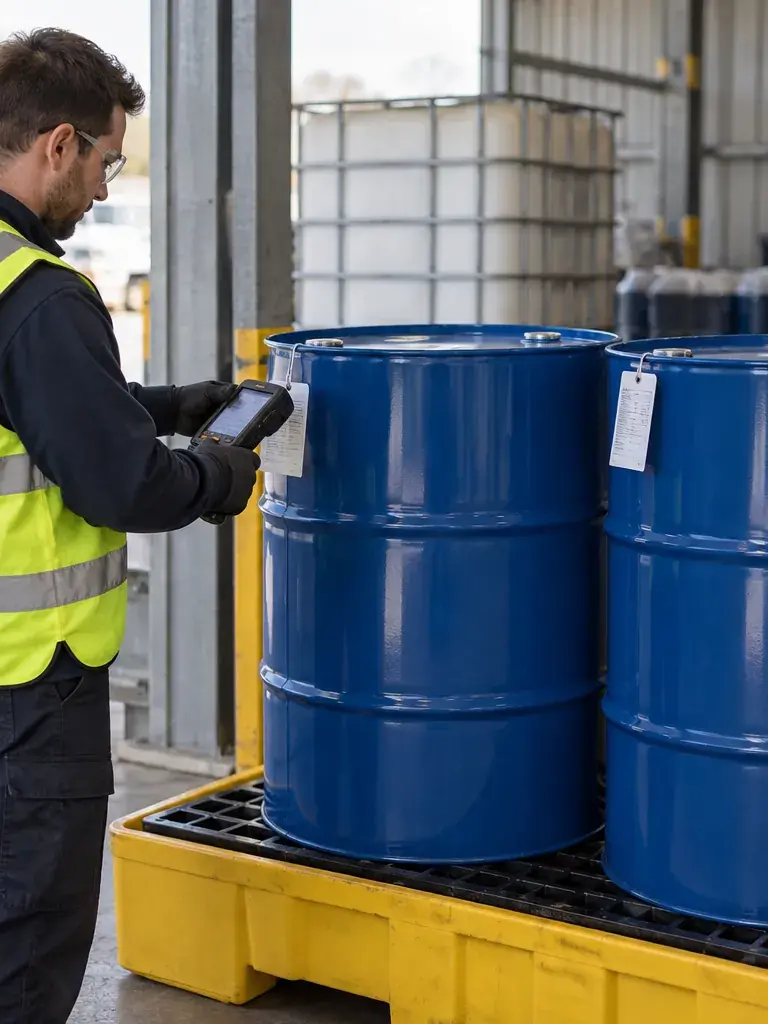
Hazardous waste
ChemicalsOilsContaminated materials
Metals and production scrap
Metal chipsScrap metalElectronic scrap

From the pick-up order to the waste report
Resourcify connects every step of your waste management across sites and disposers. Your existing disposers stay; orders, documents and invoices come together in one software, so your team spends less time collecting data and more time improving it.
- Traceability
- Proof
Ordered in one place
Sites order pick-ups for every waste stream in the software, including recurring intervals, under the terms of each contract. The disposer gets the order by email and confirms or changes the date without a login.
Documents read and checked
Delivery notes, weighing slips and invoices arrive by upload or a dedicated email inbox and are read into structured records. Anything implausible is flagged for a quick check.
Costs and volumes per stream
Invoices are kept with their orders and weighing slips. Costs and volumes add up per site, stream and disposer, and sites can be compared with each other.
Hazardous waste recorded
Hazardous waste is ordered and recorded with its waste codes, documents and the disposer’s certificates, alongside everything else.
Reported across sites
Waste balance, cost reports, separate-collection rates and CSRD figures come from the same data, for one site or the whole company.

A site requests a collection. The contractor confirms a date. The weighing slip and invoice stay with the collection record.
Two documents are matched to collection NW-1042. The collection, receipt and output retain their source records. Fictional figures show 2,400 kg received, 2,160 kg recovered and 240 kg recorded loss. Reports cover annual, waste, post-consumer and supply-chain areas, with a PowerPoint export for management presentations.
Four views follow the actual hazardous-waste coverage dashboard, permit register and ESRS report. An expiring permit keeps its reference, waste code and locations. A fictional annual report shows 12.5 tonnes of hazardous waste: 10 tonnes recycled and 2.5 tonnes in other treatment.
You can only recover the value you can see
Much of the value in commercial waste sits in details nobody tracks: containers collected half-empty on a fixed schedule, recyclables that end up in mixed waste, invoices that no longer match what was collected. Complete data per site and stream shows where to separate more, collect less often or renegotiate. It is also the data that waste law, statistics offices and CSRD increasingly ask for.
- Since Apr 2010eANVHazardous waste in Germany is tracked with electronic consignment notes and signatures, and kept in a register.
- Since 2012KrWGGermany’s circular economy law sets the waste hierarchy and keeps companies responsible for the proper disposal of their waste.
- Since Aug 2017GewAbfVCommercial waste in Germany is collected separately by stream, and the separation is documented with site plans, delivery notes or disposer confirmations.
- FY 2027CSRDCompanies with more than 1,000 employees and €450m turnover report sustainability data for financial years from 2027; first reports in 2028.
The cards show the main German and EU requirements for commercial waste. What applies to you depends on your sites and waste streams.
Summary for orientation, not legal advice.
Start with the data you want to use
- First
Test with your data
We read a set of your existing disposer documents and show you the results in the software, without commitment.
- Next
Roll-out
All sites at once or step by step, depending on which data you want to use first.
- Then
Uncover and recover
With complete data, you see where containers, collection intervals, separation and prices can improve.
Questions waste managers ask us
Do our disposers have to change anything or use another portal?
No. Your disposers keep working the way they do today. Orders reach them by email, and they confirm or change a date through a link without logging in. Their delivery notes, weighing slips and invoices are collected from wherever they already send them.
How does the data get in?
From wherever it already arrives: a dedicated email inbox, uploads, or the files your disposers send. The inbox needs no IT integration. The software reads each document and assigns it to the right site, waste type and disposer.
How accurate is the document reading?
No reading is error-free, so the software flags anything it is unsure about and your team reviews those exceptions instead of every document. The best test is a batch of your own documents, which we are happy to run with you.
Which reports do we get?
Quantities, costs and recycling rates per site, waste type and disposer, plus exports for your waste balance and CSRD reporting. Recycling rates use the recovery route each disposer reports, which you confirm once during set-up.
How much work is the set-up?
Most of the set-up comes from the documents the software reads: sites, containers and disposers. You confirm a few details once. You can start with all sites at once or step by step, depending on which data you want to use first.
Does it connect to SAP or our ERP?
Data leaves the software through exports and an API, which your IT team can use to feed SAP or a BI tool. Collecting documents needs no integration at all.
Where is our data, and is it used to train AI?
Your data is hosted in data centres in Frankfurt and processed in a private environment. It is not shared with third parties or used to train public AI models. Your IT team gets our security documentation for its review.
What does it cost?
It depends on your number of sites and what you use. We show you how the price is built for your set-up before you commit.
See how it works with your own data, without commitment.
Send us a set of documents from your disposers and see how Resourcify reads, connects and reports them before you decide anything.